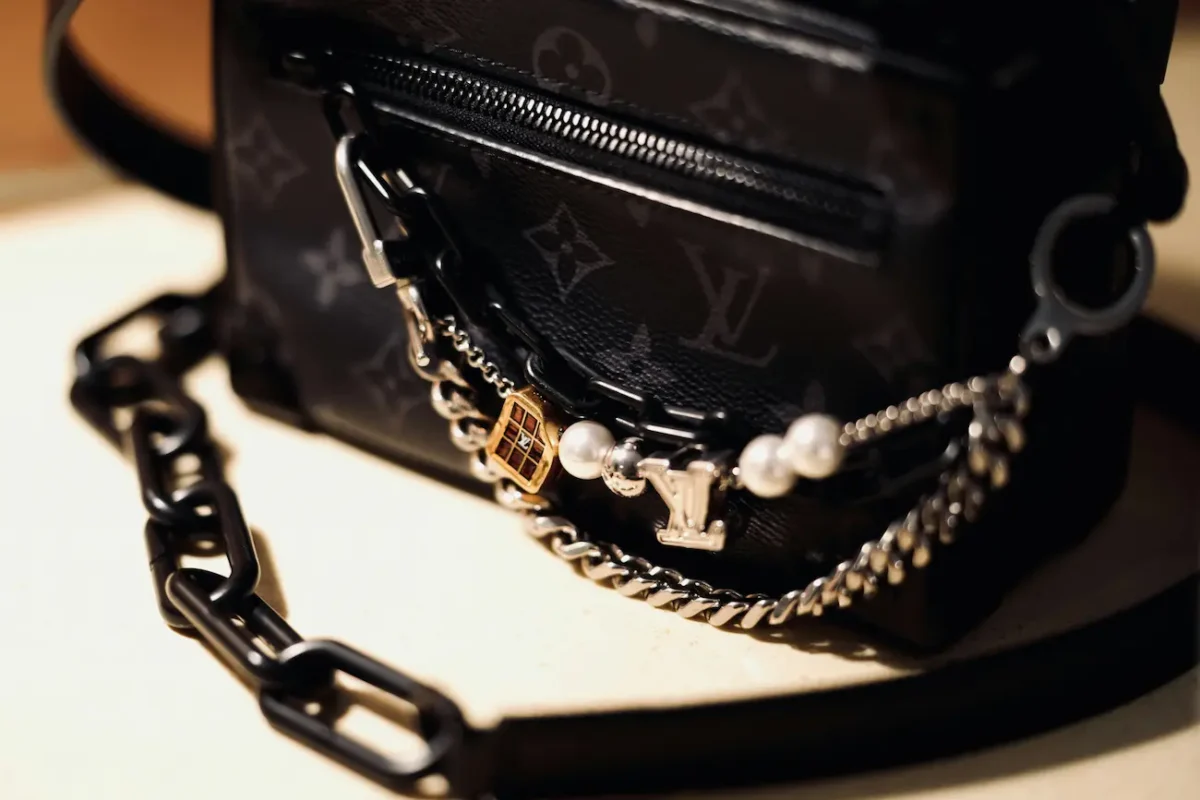
If you are new to Louis Vuitton, one of the easiest things to misunderstand is the word Monogram. It sounds like a material, but it is really Louis Vuitton’s signature pattern: the interlaced LV initials combined with stylised floral motifs. It was created in 1896 by Georges Vuitton, and in 2026 the house is officially celebrating the Monogram’s 130th year.
In other words, when people say “Louis Vuitton Monogram,” they are usually talking about the brand’s most recognisable visual code rather than one specific bag. You see it across classics like the Speedy, Neverfull, Alma, Noé and Keepall, but the Monogram itself is the motif, not the shape. Louis Vuitton describes it as a design built from the LV initials and floral emblems, originally created to protect the house’s identity as its trunks became increasingly copied.
Is Louis Vuitton Monogram leather?
Usually, no. On most classic Louis Vuitton bags, Monogram canvas is coated canvas, not full leather. That is why so many first-time buyers are surprised when they touch it. The surface can look and feel structured, but the classic Monogram material is generally a coated canvas with the pattern printed on top. Many Monogram bags then use natural cowhide leather for the trim, handles, tabs or straps, plus metal hardware.
That distinction matters because it explains why Louis Vuitton Monogram bags have such a particular feel. The coated canvas is part of what makes them practical, lightweight and relatively resistant to everyday wear, while the untreated leather trim darkens over time and develops patina. So if you have ever wondered why a Monogram Speedy or Neverfull does not feel like an all-leather bag, that is because it is not meant to.
Why is everyone talking about Monogram again in 2026?
Because 2026 is the Monogram’s 130th year, and Louis Vuitton is treating it as a major milestone. The house has launched a broader Monogram anniversary programme and says the celebration includes several capsules, including Monogram Origine, VVN, Time Trunk and the current Louis Vuitton x Murakami re-edition.
This matters because it puts the current Murakami pieces in a bigger context. They are not just random nostalgia drops. Louis Vuitton is effectively using the anniversary year to show how flexible the Monogram still is: it can be heritage-focused in one capsule and playful, graphic and pop-art in another.
What is happening with the Takashi Murakami collaboration now?
The current Louis Vuitton x Murakami re-edition is one of the clearest examples of how the Monogram can be transformed without disappearing. Louis Vuitton says Murakami’s work “pays a brilliant homage to the Monogram,” combining his psychedelic visual world with the house motif in vivid, color-saturated ways.
One of the most recognisable parts of the re-edition is the return of Monogram Multicolour, including versions shown on both white (Blanc) and black (Noir) backgrounds. Louis Vuitton’s current collection pages explicitly show both colourways.
But it is not only about white and black Multicolour. Louis Vuitton is also putting Murakami’s floral universe onto the classic brown Monogram canvas. Current pieces in the re-edition include brown Monogram bags where the surface is overlaid with Monogram Flowers reworked in Murakami’s superflat style. You can see that on pieces such as the Neverfull MM, Petite Malle and Keepall Bandoulière 45.
That is what makes the collaboration interesting right now. Murakami is not just replacing the Monogram; he is playing with it. Sometimes he turns it into bright Multicolour on white or black backgrounds, and sometimes he leaves the familiar brown Monogram in place and adds his own flower-heavy, animated visual language on top. So even when the bag still reads as “classic Louis Vuitton,” it has a distinctly Murakami mood.
Leave a Reply