
By Baggarium
Edited by Yui on Louis
Japan has long been considered a kind of “holy grail” of the vintage luxury market. For years, there has been a persistent belief: the best bags, in the best condition, and at the most attractive prices – are found there.
A few years ago, there was some truth to this. But the market has changed.
The Japanese market is undergoing a structural transformation that is affecting not only local players, but the global resale industry as a whole.
⸻
Why Japan Became the Center of Vintage Luxury
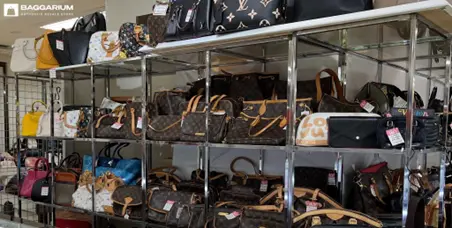
Japan’s strength in the vintage luxury market comes from a combination of culture, regulation, and supply.
Luxury items in Japan are often used and stored with a high level of care, which means pre-owned bags can remain in a condition that would be considered excellent, or even near-new, in other markets.
The country is also known for strict anti-counterfeit standards. Japan is widely regarded as one of the cleaner markets when it comes to authenticity, especially when buying through professional dealers, established resale shops, and auction houses.
There is also the question of supply. Between the 1990s and 2010s, Japan saw strong luxury consumption, and much of that inventory has gradually entered the secondary market.
⸻
The Myth of “Cheap Japan”
One of the most persistent misconceptions is that Japan remains a low-cost sourcing destination.
This used to be true. Resellers could identify undervalued items and profit from price differences across markets.
Today, this model has largely disappeared.
The reasons are straightforward: global demand from U.S. and European resellers, increasing competition for inventory and technology that accelerates sourcing and decision-making.
High-quality pieces no longer sit on the market – they are acquired almost instantly.
Japan has evolved from a source of undervalued goods into a fully competitive global marketplace.

⸻
A New Pricing Dynamic
In the past, the model was simple:
buy in Japan → add logistics → sell at a higher price in another market
Pricing is now shaped immediately by global demand. Margins at the sourcing stage are compressing, and the market itself is becoming more efficient.
This means that profit can no longer rely solely on price arbitrage. The focus is shifting toward what happens after acquisition.
⸻
A Finite Resource
It is important to recognize that the vintage market is not unlimited.
Many of the most desirable pieces have already been absorbed by the market, including strong Chanel examples, recognisable Dior models, and popular Louis Vuitton lines. This means the quality of available inventory is becoming more mixed, while truly high-quality pieces are harder to find.
This is creating a structural shift: a growing share of the market is now made up of items in mid-level condition, which often require restoration or careful reconditioning before they can be sold at their full potential.
⸻
Where Profitability Comes from Today
As sourcing margins continue to shrink, the key question becomes:
Where is the real profit generated?
The answer lies in business structure. Two factors now define strong resale operations.
1. A Loyal Client Base
The model of one-off transactions is becoming less effective.
Resellers with a strong, loyal customer base gain a critical advantage:. They can turn over inventory more quickly, predict demand more accurately, and rely less heavily on third-party marketplaces.
In many cases, the difference between an average and a high-performing reseller is not the product — but the relationship with the client.
⸻
2. Restoration and Value Creation
As undervalued inventory becomes harder to find, profitability shifts toward post-acquisition value creation.
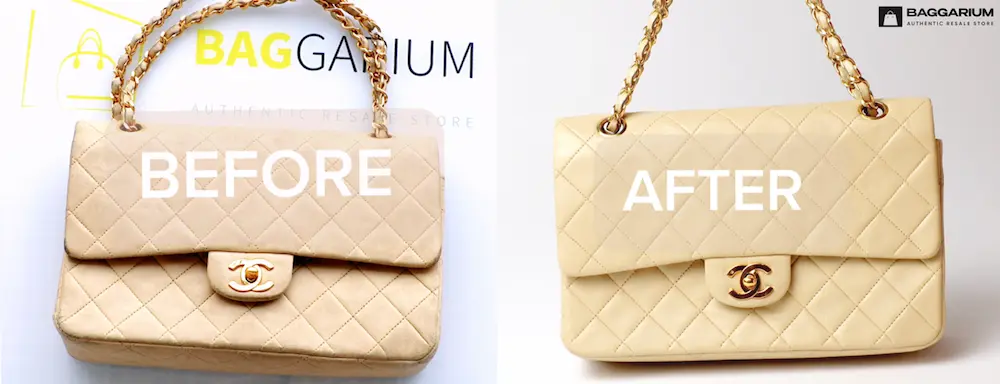
Professional restoration and “bag spa” services are no longer optional – they are becoming a core part of the business model. In practical terms, high-quality restoration can add around 30% to the acquisition cost. When combined with strong positioning and the right sales channels, total margins can reach approximately 40–45%.
This fundamentally changes the nature of resale. It is no longer just about buying and selling – it is about transforming the product before it reaches the customer.
⸻
A New Phase of the Market
The vintage luxury market is moving from an arbitrage-driven model to an operation-driven model. In other words, success is no longer only about finding a bag at the right price. It is about controlling the full cycle:
sourcing, restoration, product positioning, and distribution.
The companies that perform best will be those that can create value at every stage of that process.
⸻
Conclusion
Japan can no longer be seen as a hidden source of undervalued luxury goods. It has become a globally integrated, highly competitive market, where prices increasingly reflect real demand. In this environment, success is no longer defined by access to product – but by the ability to create value around it.

Leave a Reply